
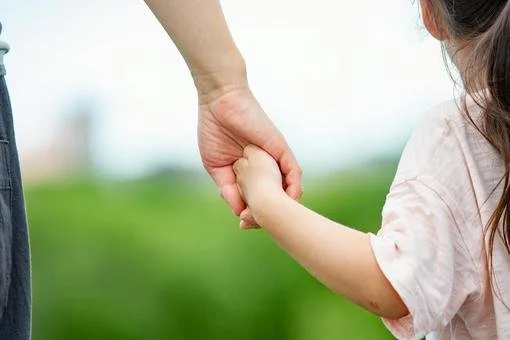
According to Their Path: The Divine Work of Holding Each Child
Sometimes loving our children means going against the current. This summer, we made an unconventional choice to give two of our children something they deeply needed: our undivided attention. What began as a complicated decision about family travel became a deeper lesson in what it means to truly see each child, and how, in holding space for our children, we create space to heal something within ourselves.
My husband and I recently returned home from a summer vacation that covered multiple continents. We spread across the world, as he and our daughter flew East while our son and I flew to the West. Our older boys stayed in Israel, unable to leave the country due to them being yeshiva students at army age, staycationing and camping with family. This choice wasn’t easy to make. We felt like fish swimming upstream, trusting an inner knowing that there was a purpose waiting for us on the other side.
Every family has their unique ways of raising their kids, doing what they need to do to keep each person in the family unit motivated and nourished. We use vacations as prizes, and two of our children were up for their turns. We had planned on traveling early in the summer with each on their own so that we could vacation together as a family during bein hazmanim (the three week summer break that yeshivas take), but the war that took place between Purim and Pesach changed our travel plans, like many of our fellow travelers. Besides for the other atrocities that took place in that war (may it be the last one), our airport was closed and all the schedule changes had pushed travel plans off, so we had to work with what was available.
We decided to put our priorities in order, and that was to fulfill our promise to our kids, that they would get their well deserved prizes from their hard work during the school year. After many discussions, it was decided that we would move forward with the plans and move the prize trips to the main vacation period, and that each child would have their one on one time with each one of us in order to ensure the atmosphere they needed.
Raising children takes inner wisdom, courage, deep love, prayer, commitment, and a lot of faith in Hashem. Shlomo Hamelech says to raise your child according to his or her ways, and that means getting to know who that child is and what way works particulary well for them, considering personality, birth order, strengths and weaknesses.
This is the same for our inner children. Our emotions are called inner children in Kaballah wisdom, and as we know, healing requires getting in touch with our emotions, and letting ourselves feel again with compassion and acceptance. Then our blocked and suppressed feelings get expressed and then integrated into our daily lives, creating space for love, our natural state.
Around the time my youngest child was born, I left my career as a graphic artist and owner of an advertising design paper and signed up for a professional Judaica art course, returning to my love of creating art using my hands. I loved owning and managing a business, but I knew that I had to give up this business in order to find myself.
My youngest child’s birth and post birth was a time in my life that brought up old and new traumas, and eventually led me to whole body health as a way to return to my body and mind, and live authentically and in line with what Hashem wanted for me and my purpose. An outer child mirrors an inner child. It’s emotions will trigger your emotions, both positive and negative, and show you clearly what you need to work on if you want to evolve and grow in this world.
When we respond with love, care and attention to our children’s needs, they thrive.
This past summer my husband and I chose to spend extra time and money on two of our beloved children, listen to them and give them what they needed - attention. It wasn’t a simple decision, and definitely not the norm, but we returned with happy thriving kids who are ready to take on the new year with an extra amount of unconditional love and care in their emotional piggy banks.
The wondrous thing about paying attention to and being present with your outer child is that it heals your inner child.
What Covid Taught Me About Health & Wellness
Since 2020, I have watched the wellness industry change, but more than that, I have watched myself change inside of it.
My wellness journey began in 2018, before Covid, before the world shifted, and before I fully understood what it means to live in relationship with my body. At the time, I was dealing with chronic inflammation and uncomfortable symptoms, and I decided to experiment with removing gluten, dairy, and sugar from my diet. Within only six days, I felt lighter, happier, clearer, and more hopeful.
That experience was powerful for me because it showed me, in a very real way, that my choices mattered. What I put into my body could affect how I felt in my body. I continued eating that way for more than three years, and it taught me so much. It taught me about food, but even more than that, it taught me about self trust. I learned that I could take loving action on my own behalf, and that caring for my health was not about punishment or perfection, but about learning how to listen.
Health had always interested me. Even as a schoolgirl, I loved learning biology and understanding how the body works. But I did not really connect food, inflammation, mood, digestion, energy, and overall health until I began learning more about the gut, the brain, and the body’s response to stress and overload.
That was the beginning of my path into natural health and nutrition.
At first, the empowerment I felt was incredible. I was no longer waiting for someone else to fix me. I was learning that I could shape my life, support my body, and show up for myself through small, consistent choices.
But like many healing journeys, mine was not perfectly balanced from the beginning.
Before Covid, I saw food, holistic health, and natural medicine as the main path to wellness. I had become wary of modern medicine because of painful personal experiences and because of what I had learned while researching the history of the medical model. I was deeply drawn into the world of natural medicine, but looking back, I can now see that some of that intensity came from fear and unresolved trauma. And that’s ok.
Like so many people, I had strong feelings about health, immunity, prevention, and medical choice. I believed deeply in natural immunity and did not want to be pushed into anything that felt wrong for my body. At the same time, I can now look back with more compassion and honesty and see that some of my beliefs were shaped by my own history and by being part of communities of people who had been harmed or dismissed in medical settings.
There was real wisdom there, and there was also fear.
Then I got sick with the very virus I had thought I had protected myself from.
The symptoms hit hard: pounding headaches, flu-like feelings, loss of taste and smell, deep fatigue, back pain, and gallstones.
That season changed me. It humbled me. I had believed that health was mostly about what we put into the body, but my own experience taught me that health is also about what the body is carrying: stress, fear, resentment, emotional overwhelm, old beliefs, unprocessed pain, and a nervous system that has been trying to protect us for a very long time.
My healing did not happen quickly. It took years to find stability again. For a long time, I carried the gallstones in my body, and in many ways, they became a physical reminder of the bitterness, resentment, and heaviness I was still holding toward the medical system, toward my past, and toward parts of myself I had not yet fully met with compassion.
When I finally reached the point where surgery became necessary, I had to face another layer of healing. I had to let go of the idea that one system had all the answers. I had to release the belief that natural medicine was always safe and modern medicine was always harmful. I had to become more humble.
And in that humility, something beautiful opened.
I began to understand that Hashem placed many tools in the world.
The question is not only which tool we use, but how we use it. Are we using it from fear or from wisdom? From panic or from responsibility? From disconnection or from care? From pressure or from presence?
Today, I eat in a more balanced way. I practice health in a more balanced way. And I coach from a much more integrated place than I could have before.
I no longer believe that wellness is about choosing one world and rejecting the other. Real wellness includes nutrition, but it is not only nutrition. It includes medical care, but it is not only medical care. It includes natural remedies, but it does not worship natural remedies. It includes the nervous system, emotional resilience, breath, stress patterns, trauma awareness, faith, community, and our relationship with ourselves and others.
Covid changed the health industry because it forced people to ask deeper questions. People began looking beyond simple advice like “eat better” or “exercise more.” They began asking about immunity, stress, burnout, nervous system regulation, medical trust, emotional safety, and how to rebuild a relationship with the body after illness or fear.
The wellness conversation became more personal, more honest, and more human. For me, it also became more integrated.
I now understand that illness and symptoms often need to be approached with curiosity, compassion, and support. Sometimes the body needs medical attention. Sometimes it needs nourishment. Sometimes it needs rest. Sometimes it needs emotional release. Sometimes it needs a person to stop living in survival mode. Often, it needs more than one thing at the same time.
I also believe that healing is not meant to happen in isolation.
One of the most painful parts of modern healthcare is when a person is labeled, placed in a box, given instructions, and sent home to heal alone. But people are not boxes. People are whole beings with stories, families, fears, responsibilities, and souls.
Wellness is not only an individual state. It is also communal. We heal through support, honesty, transparency, connection, education, and safe spaces where people can be seen as more than their symptoms.
That is the shift I experienced in my own life, and that is the shift I now bring into my work. It is wellness that helps us return to ourselves, to our bodies, to each other, and to Hashem with more trust, compassion, and wholeness.
Loving Israel Again
Time for a reality check.
If I’m being honest, this past war took a toll on me.
And I’m sure it affected you too, in one way or another.
When the missile fell in Beit Shemesh, it shook me. It was so close to home. It made everything feel real in a way that’s hard to describe. The lack of routine and being stuck at home for days on end with uncertainty in the air was overwhelming in a chilling and quiet way, making its way into my nervous system.
And it got me thinking.
I’ve spent years working to move out of a powerless mindset.
And yet, lately, I’ve felt how easy it is to slip back into it.
We are surrounded by reasons to feel powerless: hatred from the world, antisemitism, missiles and threats, people in power who seem to have control over our lives. It’s real. It’s not imagined.
After I let myself feel the anger and unfairness of it all, I choose to bring my focus back to the miracle that I live with every single day, that I am living and thriving in my homeland along with millions of other Jews.
This land is filled with something that is hard to explain, a quiet holiness, a simple beauty, something real and alive. We are living inside a promise that waited 2,000 years to be fulfilled.
We often relate to ourselves through pain. Through the Holocaust. Through persecution.
Through everything we’ve been through as a people. And that pain is real. It deserves to be acknowledged and honored. But do we have to build our entire identity around it? Do we have to live inside it? I don’t think so.
There is a difference between remembering and remaining there. When we stay in a powerless mindset, something happens: We lose our sense of agency. We lose our ability to respond in a grounded way. We begin to justify things that shouldn’t be justified.
And even when we are right, even when circumstances are unfair, it’s still a painful place to live from. Personally, I don’t want to live there. I want to live in a place where I feel I can respond, choose, and move forward.
Today, we are exposed to everything. Every story. Every tragedy. Every opinion. It’s overwhelming. And it shapes how we see reality.
But if we pause for a moment, and if we look around, not at the headlines, but at our actual lives, life is often better than we think. Not perfect. Not without struggle. But deeply, quietly good. As someone in the wellness world, I see a lot of struggle. Health challenges. Emotional pain. Stress. Exhaustion. But this is part of being human.
There have always been difficulties. There have always been wars. There have always been challenges. The difference today is how much of it we carry with us, all the time.
And so I find myself returning to something simple:
Gratitude. Not as an escape. Not as denial. But as a choice.
I love that I get to watch this land being built right in front of my eyes.
I love that life here is centered around our holidays.
I love the quiet of Shabbos.
I love seeing children playing in the streets, and older people sitting on benches.
I love the sense of community, the closeness.
I love the trees, the moshavim, the simplicity.
I love that fruit is seasonal and fresh.
I love that my children speak Hebrew, the language of the Torah.
I love that Torah here feels alive, like drinking sweet water.
I love that everything is close, connected.
I love that even in moments of fear, there is a feeling that Hashem is here, close, watching, holding.
This doesn’t mean ignoring reality. There are real challenges. Real dangers. Real pain. But it does mean choosing how we relate to it. We don’t have to live in fear. We don’t have to live in victimhood. We can live with awareness, with strength, and with perspective. We are living in a time of return. Not just physically to the land. But internally, to ourselves. To something more grounded, more connected, more real. Geula is not only something that will happen one day.
In many ways, it is already unfolding.
You can feel it.
You can see it.
You can live inside it.
Integrative Nutrition and How It Can Improve Your Health
What Is Integrative Nutrition and How Can It Help Improve Our Health?
Our health is a mirror of how we feel about ourselves. It reflects the quality of our relationship with ourselves. Our bodies communicate through physical and emotional signals, offering insight into what may need to shift in order for balance to be restored.
It is now widely recognized that physical health is deeply connected to emotional health. The mind–body connection, once considered an alternative approach, has become increasingly mainstream. One compelling statistic from the Centers for Disease Control and Prevention (CDC) reports that chronic stress is linked to 75%–90% of all doctor visits and has been associated with conditions such as heart disease, diabetes, obesity, and autoimmune disorders.
Stress begins as an external stimulus that triggers thoughts and emotions, which then send signals throughout the body about how to respond. The fact that stress, an emotional experience, is connected to so many physical conditions highlights just how interconnected our inner and outer worlds truly are.
Integrative Nutrition supports individuals in creating greater balance by reducing stress and increasing overall health and well-being. This approach focuses on what we call Primary Foods and Secondary Foods. Primary Foods are the non-food aspects of life that nourish us emotionally, mentally, and spiritually, such as relationships, career satisfaction, physical activity, spirituality, joy, and sense of purpose. Secondary Foods refer to the actual foods we eat. Integrative Nutrition encourages a balanced way of eating that is tailored to each person’s unique needs, preferences, and sensitivities.
In addition, we emphasize bio-individuality, the understanding that each person has distinct dietary and lifestyle requirements. What works well for one person may not work for another.
Because health is fundamentally a relationship with ourselves, Integrative Nutrition also places strong focus on how we treat ourselves. This pillar is often referred to as self-care or self-love, making ourselves a priority and choosing to treat ourselves with kindness and respect. This includes cultivating healthy boundaries, tending to physical and emotional needs, seeking medical care when necessary, and following through on commitments to ourselves. While activities like coffee dates or manicures can be part of self-care, true self-care goes much deeper than occasional treats.
Integrative Nutrition Health Coaching helps individuals move toward their health goals with guidance and support. Many people are seeking a compassionate, understanding presence to walk alongside them on their health journey. When reaching goals feels overwhelming alone, having a coach can make a meaningful difference.
Modern life is inherently fast-paced and stress-filled. Between demanding work schedules, societal expectations, technology, social media, commuting, and constant exposure to news, we are continually receiving stress signals. Over time, this can place the body in a near-constant state of fight or flight, contributing to a wide range of health concerns.
We also live in an age of endless information. With millions of posts, blogs, and videos offering health advice, it can be difficult to know what to trust or follow. At the supermarket, many people feel unsure about what to buy. Questions arise such as:
Are these cookies truly harmful, or can I enjoy a few? Should I start drinking a smoothie with a raw egg because I saw it online? Can I eat cereal and milk without guilt? What type of movement is right for me Pilates, gym workouts, yoga, or dance?
Integrative Nutrition Health Coaches help bring clarity to these everyday questions, offering personalized guidance that aligns with each individual’s body, lifestyle, and goals.
Many doctors welcome Integrative Nutrition Health Coaches into the healthcare landscape because they help bridge an important gap. Coaches provide the time, education, and ongoing support that many patients need beyond a brief doctor’s visit or prescription.
When we approach our health with intention, compassion, and integrative practices, our relationship with ourselves begins to shift. As that relationship improves, our health often improves as well. We feel better emotionally and physically and we begin to recognize a reflection in the mirror that feels more aligned, vibrant, and whole.
Our health is a mirror of how we feel about ourselves. It reflects the quality of our relationship with ourselves. Our bodies communicate through physical and emotional signals, offering insight into what may need to shift in order for balance to be restored.
It is now widely recognized that physical health is deeply connected to emotional health. The mind–body connection, once considered an alternative approach, has become increasingly mainstream. One compelling statistic from the Centers for Disease Control and Prevention (CDC) reports that chronic stress is linked to 75%–90% of all doctor visits and has been associated with conditions such as heart disease, diabetes, obesity, and autoimmune disorders.
Stress begins as an external stimulus that triggers thoughts and emotions, which then send signals throughout the body about how to respond. The fact that stress, an emotional experience, is connected to so many physical conditions highlights just how interconnected our inner and outer worlds truly are.
Integrative Nutrition supports individuals in creating greater balance by reducing stress and increasing overall health and well being. This approach focuses on what we call Primary Foods and Secondary Foods. Primary Foods are the non food aspects of life that nourish us emotionally, mentally, and spiritually, such as relationships, career satisfaction, physical activity, spirituality, joy, and sense of purpose. Secondary Foods refer to the actual foods we eat. Integrative Nutrition encourages a balanced way of eating that is tailored to each person’s unique needs, preferences, and sensitivities.
In addition, we emphasize bio-individuality, the understanding that each person has distinct dietary and lifestyle requirements. What works well for one person may not work for another.
Because health is fundamentally a relationship with ourselves, Integrative Nutrition also places strong focus on how we treat ourselves. This pillar is often referred to as self care or self love, making ourselves a priority and choosing to treat ourselves with kindness and respect. This includes cultivating healthy boundaries, tending to physical and emotional needs, seeking medical care when necessary, and following through on commitments to ourselves. While activities like coffee dates or manicures can be part of self care, true self care goes much deeper than occasional treats.
Integrative Nutrition Health Coaching helps individuals move toward their health goals with guidance and support. Many people are seeking a compassionate, understanding presence to walk alongside them on their health journey. When reaching goals feels overwhelming alone, having a coach can make a meaningful difference.
Modern life is inherently fast paced and stress filled. Between demanding work schedules, societal expectations, technology, social media, commuting, and constant exposure to news, we are continually receiving stress signals. Over time, this can place the body in a near constant state of fight or flight, contributing to a wide range of health concerns.
We also live in an age of endless information. With millions of posts, blogs, and videos offering health advice, it can be difficult to know what to trust or follow. At the supermarket, many people feel unsure about what to buy. Questions arise such as:
Are these cookies truly harmful, or can I enjoy a few? Should I start drinking a smoothie with a raw egg because I saw it online? Can I eat cereal and milk without guilt? What type of movement is right for me Pilates, gym workouts, yoga, or dance?
Integrative Nutrition Health Coaches help bring clarity to these everyday questions, offering personalized guidance that aligns with each individual’s body, lifestyle, and goals.
Many doctors welcome Integrative Nutrition Health Coaches into the healthcare landscape because they help bridge an important gap. Coaches provide the time, education, and ongoing support that many patients need beyond a brief doctor’s visit or prescription.
When we approach our health with intention, compassion, and integrative practices, our relationship with ourselves begins to shift. As that relationship improves, our health often improves as well. We feel better emotionally and physically and we begin to recognize a reflection in the mirror that feels more aligned, vibrant, and whole.